Felca Law and Newborn Photography: Should Photographers Be Concerned About Their Instagram Accounts in Brazil?
Over the past few months, many newborn photographers have started receiving messages, notifications, and even alerts related to social media child protection policies. At the same time, the so called Felca Law has become a frequent topic in photography communities, raising questions and concerns.
But after all, could the Felca Law negatively affect baby photographers? Are newborn photos at risk of being removed? Could accounts be blocked?
In this article, I'll explain what is happening and what precautions I believe are important for professionals who work with newborns and children.
What is the Felca Law?
The Felca Law is the popular name given to new digital protection measures for children and teenagers that have gained momentum in Brazil. Its main objective is to combat child exploitation, the sexualization of minors, and the inappropriate use of children's images on the internet.
Although the legislation was not created specifically for photographers, it directly influences how digital platforms monitor content involving minors.
Can Newborn Photos Be Prohibited?
No. Professional newborn photography, carried out with parental authorization and for artistic or documentary purposes, is not the target of these measures.
The issue is that platforms such as Instagram and Facebook use automated systems to identify potential policy violations. These systems do not always interpret the context of an image correctly.
As a result, some photos may receive closer review, especially those involving babies wearing little clothing or images where skin occupies a large portion of the composition.
Why Are Some Photographers Concerned?
Many professionals have reported receiving notifications related to Meta's child protection policies.
In some cases, these are simply informational notices. In others, specific content may undergo additional review.
This situation has created uncertainty because newborn photographers work with the very audience at the center of these new policies: babies and children.
What Precautions Can Newborn Photographers Take?
A few simple measures can help reduce risks and demonstrate professionalism:
1. Keep Image Release Forms Up to Date
Every photographer working with children should have clear, documented authorization from the child's parents or legal guardians.
2. Avoid Unnecessary Exposure
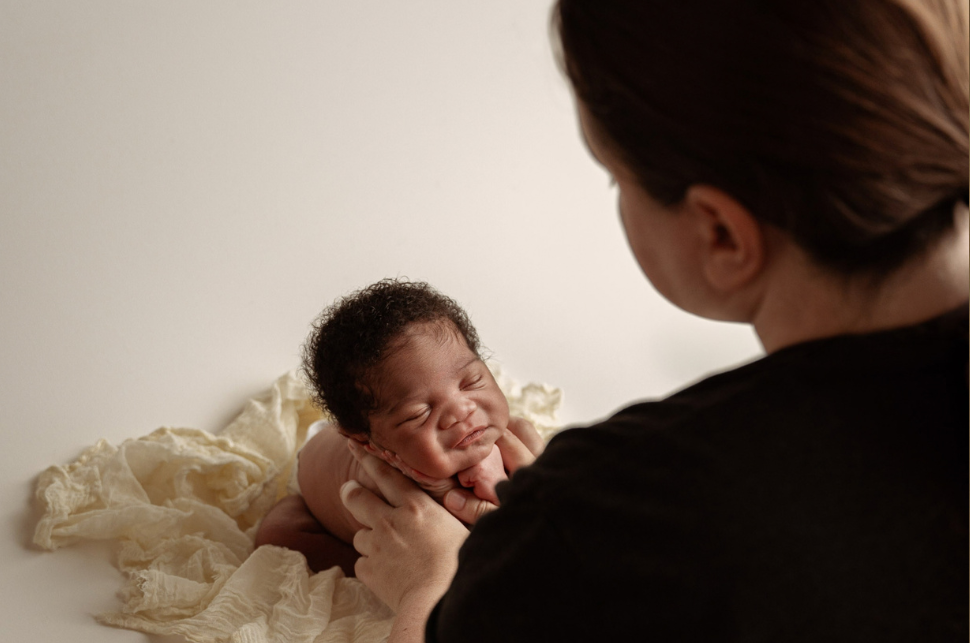
Whenever possible, use blankets, wraps, and posing techniques that preserve the baby's privacy.
3. Review Older Content
It is worth reviewing older posts to determine whether they still align with current platform policies.
4. Diversify Your Channels
Do not rely exclusively on Instagram.
Having your own website, an email list, and a direct communication channel with clients provides greater security for your business.
5. Prioritize Family Context
Photos that show connection, warmth, and family bonding tend to communicate the purpose of the work more clearly.
What I Believe About the Future of Newborn Photography
I believe newborn photography will continue to exist and remain highly valued by families around the world.
What we are experiencing is a cultural shift: parents are becoming more aware of their children's digital exposure, and platforms are strengthening their protection mechanisms.
In this environment, professionals who work with ethics, transparency, and respect for family privacy are likely to become even stronger.
Conclusion
The Felca Law was not created to prevent newborn photography. However, it is part of a broader child protection movement that is influencing social media policies.
For this reason, it is important to stay informed about platform updates, maintain good practices regarding image authorization, and build a digital presence that does not depend exclusively on Instagram.
Rather than representing a threat to the industry, this may be an opportunity to strengthen families' trust and demonstrate the care that has always been an essential part of working with newborns.
 Português (Portugal)
  Español (España)
  Français (France)
  Italiano (Italia)
  Deutsch
  English (en-GB)
  English(en_US)
  Português(pt_BR)
 Ordering